Wednesday, 1 June 2011
Despite scandal, Blatter poised to extend reign (AP)
ZURICH (AP)—It comes as perhaps no surprise that Sepp Blatter, after decades as the head of world football, has become immune to the threat of crisis.
Facing the biggest scandal in FIFA’s 107-year history, the Swiss bureaucrat plans to ride this one out, like he has so many before, and win a fourth presidential term on Wednesday.
“Crisis? What is a crisis?” he memorably asked on Monday at a packed FIFA news conference where he attempted to weather the storm of recent bribery allegations. “We are not in a crisis. We are only in some difficulties.”
 FIFA President Sepp Blatter ar…
 Getty Images - May 31, 12:57 pm EDT
But Blatter was clearly rattled. So often in control, displaying an enigmatic smile in the face of the toughest adversity, he lost his cool, scolding reporters not to treat his house “like a bazaar.”
He moved to leave the platform, hesitated, then returned. Refused to answer, then came back to answer.
It was the exception to the rule that highlights what an operator, schmoozer and diplomat Blatter has been ever since he started working for FIFA in 1975.
Behind closed doors, he has proved a ferocious force that has kept him at the helm of FIFA for 13 years and extended the boundaries of the World Cup to include South Africa last year and Qatar in 2022.
Blatter has made sure FIFA is overseeing a $4.19 billion budget in a four-year World Cup span and, under him, the world’s most popular sport has political clout on a par with the International Olympic Committee.
And a decade after the Olympic movement went through a cathartic bribery scandal linked to the 2002 Winter Games in Salt Lake City, much the same is happening at FIFA.
And this is where his remaining challenge lies. Blatter’s meeting with IOC President Jacques Rogge at the opening ceremony of the FIFA congress on Tuesday might have been a reminder of what is at stake—handle the crisis well and you survive, like the IOC did. Let it get further out of hand, and there is no knowing what will happen.
On the eve of his expected coronation, the bribery scandal threatens to turn Blatter’s legacy of a visionary who brought the World Cup for the first time to Africa with the successful staging of the 2010 World Cup into one of a lethargic leader who let the rot of corruption take over the world’s premier game.
In his long career, Blatter has often survived adversity, even thrived on it.
He reached the pinnacle of football, with a late entry into the 1998 race for the presidency, much to the displeasure of then-UEFA chief Lennart Johansson.
At the time, the key factor was winning endorsement of the English FA, which he did on his way to a stunning 110-80 win. Little wonder accusations of backstabbing and bribery went flying. It is the same English federation which called on him Tuesday to postpone the election and has said it will not vote for him.
In 17 years leading up his election, Blatter had already learned to deal with shifting alliances first as FIFA secretary general, then as CEO under Brazil’s Joao Havelange.
Even though the ongoing bribery scandal is bigger for FIFA itself, Blatter himself was in more trouble in 2002 when FIFA was on the verge of bankruptcy after the collapse of the ISL marketing company.
There was bitter infighting with secretary general Michel Zen-Ruffinen and several members of the executive committee. Blatter survived. Little wonder he has been called the Teflon man.
And a decade later, FIFA under Blatter made a $631 million profit in the four years leading up to the 2010 World Cup in South Africa, registering $202 million of that in the last year alone.
How does he survive at the top? Many credit his mastery of every detail of FIFA’s rules and machinery learned under his mentor Havelange.
The Brazilian, an imposing figure, physically exuded power and had a bullying, brooding style.
Blatter, a short, chubby man, has added charm and flattery to be just as effective in getting what he wants.
AP Sports Writer Graham Dunbar contributed to this report.
Agences de presses
posted by csconstantine.com at
01:18
0 Comments


Tuesday, 31 May 2011
Moggi recommended for 5-year sentence in scandal (AP)
NAPLES, Italy (AP)—Magistrates in Naples have recommended that former Juventus executive Luciano Moggi be sentenced to five years, eight months in prison for his role in the 2006 match-fixing scandal.
Moggi was the central figure in the scandal that resulted in Juventus being stripped of the 2005 and 2006 Serie A titles and relegated to Serie B.
Magistrates made their recommendations on Tuesday for custodial sentences which included four years for former referee designator Paolo Bergamo, four years and six months for his colleague Pierluigi Pairetto, and three years for former ref Massimo De Santis.
Also implicated are Fiorentina owners Andrea and Diego Delle Valle, Lazio president Claudio Lotito and officials from Reggina, Messina and AC Milan.
Moggi denies all charges.
Agences de presses
Labels: 5year, Moggi, recommended, scandal, sentence
posted by csconstantine.com at
20:52
0 Comments
Bin Hammam to appeal suspension in bribery scandal (AP)
DUBAI, United Arab Emirates (AP)—FIFA executive Mohamed bin Hammam plans to appeal against his suspension over bribery allegations, claiming Monday that he was being “punished before I am found guilty.”
A FIFA ethics committee on Sunday provisionally suspended bin Hammam and FIFA vice president Jack Warner pending a full inquiry into allegations Caribbean football leaders were paid $40,000 each to back the Qatari’s now-abandoned bid for the FIFA presidency.
In a statement released Monday, bin Hammam said he has lodged a request with FIFA to file his appeal by Tuesday so that he could be reinstated ahead of the June 1 congress where FIFA executives will vote for a president.
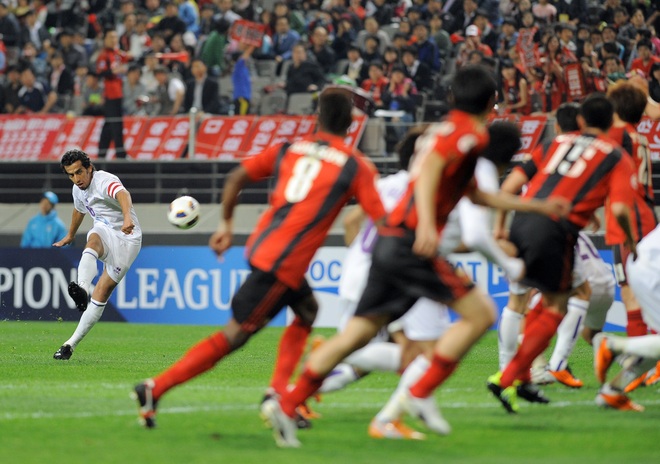 United Arab Emirates' Al A…
 Getty Images - May 4, 9:16 am EDT
The 62-year-old bin Hammam had been incumbent Sepp Blatter’s only challenger but the Qatari withdrew from the race on Sunday hours before the ethics committee issued its ruling.
“The way these proceedings have been conducted is absolutely not compliant with any principles of justice. I am punished before I am found guilty,” bin Hammam said in his statement Monday.
“I get the impression that the outcome of these proceedings had been defined from the very beginning as it has been made evident at the press conference on Sunday evening at which FIFA General Secretary Jerome Valcke showed his bias very clearly. This is not acceptable as the FIFA Ethics Committee is supposed to be a fully independent body.”
Valcke said in a statement that “it is fully incorrect—and quite disappointing—to say that I have an influence on the FIFA Ethics Committee and its proceedings.”
In a statement issued early Tuesday morning, the AFC confirmed that its most senior vice president, China’s Zhang Jilong, will be acting president of the confederation, according to its statutes, during bin Hammam’s provisional suspension.
“We, the members of the AFC Executive Committee, express our deepest concern at the latest developments within FIFA and that involves the AFC President Mohamed Bin Hammam,” the statement said. “We will be following the investigation as it takes its course. We hope the outcome of the investigation will be in the best interests of football in Asia and beyond.”
Bin Hammam’s complaints about the process were echoed across the Middle East, where he has some of his strongest support. Football federations and sports columnists decried the ruling, complaining it was unfair and appeared to be orchestrated by Blatter to ensure he remained in office.
Newspapers in Egypt were especially critical of the 75-year-old Blatter, who is seeking a fourth term as leader of world football’s governing body.
The Al-Dustour daily said bin Hammam had “surrendered to the tyranny of Blatter.” Al-Gomhuria called the Swiss president a “sly fox who cannot be easily hunted” and compared him to the country’s longtime president, Hosni Mubarak, who was ousted from office earlier this year.
AFC vice president Yousuf al-Serkal, an ally of bin Hammam from neighboring United Arab Emirates, said he didn’t believe the charges and considered them part of a bid to remove bin Hammam from the presidential race.
“I think bin Hammam has been mistreated,” al-Serkal said. “Bin Hammam is the right person who should have been elected to the presidency of FIFA from the point of view of change.
“The way he was treated, I think it was unfair. All the allegations were just from a report. There were no evidence as such. I feel sorry for the person I have known for long time as a decent person.”
Al-Serkal and others around the region also complained that bin Hammam’s rights were violated because he was suspended before any ruling had been issued on the bribery allegations.
After a day-long hearing Sunday, the FIFA ethics panel said there was sufficient evidence to further investigate allegations that bin Hammam and Warner, the CONCACAF President, offered the bribes to more than two dozen delegates at a Caribbean football association meeting on May 10-11 in Trinidad.
The payments were allegedly made to secure votes for bin Hammam in his campaign to unseat Blatter. If found guilty, bin Hammam and Warner could be expelled from FIFA and banned for life from all football activity.
“We believe it is a very disappointing decision by the ethics committee because so far they don’t have solid evidence against bin Hammam,” said Munem Fakhoury, a former member of Jordan’s national team who is also a top football executive in the country.
“Bin Hammam is a very professional individual with an excellent record and what is happening today is truly unfair for him and for the world of football.”
Sports columnist Gamal Holail, writing in the Egyptian newspaper Al-Gomhuria, felt bin Hammam was a victim of Blatter’s effort to sideline any challengers.
“Blatter wants to defame the reputations of the honest people like Bin Hammam,” Holail wrote, “so he can remain sitting on the presidential chair for life and rule the empire of the international football until death. But his dented reputation has revealed his false essence and it is time for him to leave.”
Said al-Mlaiki, sports analyst and reporter in Iraq, said he felt most Arabs would see the allegation as part of a Blatter smear campaign—which could backfire on him in the Middle East.
“I think that Blatter has committed a mistake by targeting bin Hammam in such way because he will lose the support of some Arabic and Islamic football federations,” he said. “The timing of the actions against bin Hammam ahead of the FIFA elections arouses questions and suspicions.”
But there was at least one football federation that welcomed the investigation and would accept whatever ruling FIFA makes.
“I wish this didn’t happen but also I am happy because there is accountability for all those who might breach the law,” said Taj El-Deen Fares, the deputy head of the Syrian Football Federation. “I am afraid of the repercussions of this issue on the fame of the international federation and its unity.”
Associated Press writers Maamoun Youssef in Cairo, Roufan Nahhas and Sameer N. Yacoub in Jordan and Albert Aji in Damascus contributed to this report.
Follow Michael Casey on Twitter at https://twitter.com/mcasey1
Agences de presses
Labels: Appeal, bribery, Hammam, scandal, suspension
posted by csconstantine.com at
01:30
0 Comments
FIFA scandal deepens, Blatter denies crisis talk (Reuters)
* Blatter rejects crisis talk
* FIFA moves to neutralise leaked email
* Qatar denies wrongdoing over 2022 World Cup bid
By Mike Collett
ZURICH, May 30 (Reuters) - FIFA president Sepp Blatter, facing a deepening corruption scandal including accusations that Qatar bought the right to stage the 2022 World Cup, denied there was a crisis and described the problems as local difficulties on Monday.
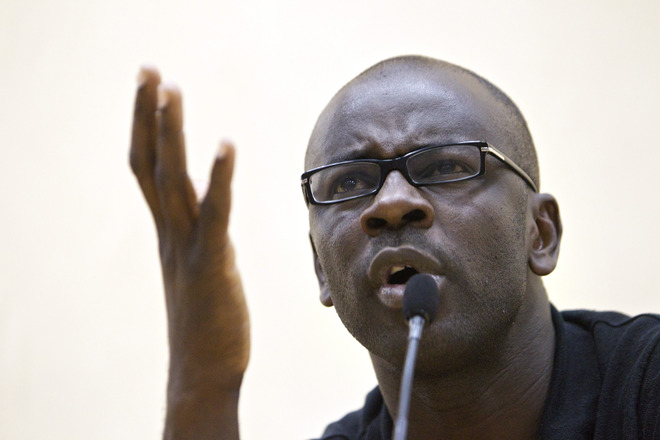 A picture taken on May 13, 201…
 Getty Images - May 27, 5:57 am EDT
Blatter began a week in which he should be re-elected as president for a fourth term in combative mood, berating media for their lack of manners and giving Qatar his public backing.
FIFA general secretary Jerome Valcke earlier issued a statement denying he meant to suggest anything corrupt about the Qatar bid for 2022.
While all the talk outside FIFA House has been of a drip-feed of corruption allegations creating the worst crisis the game has faced, Blatter said his organisation was merely experiencing local difficulties they could solve internally.
It did not feel that way earlier in the day when CONCACAF president Jack Warner made public an email in which Valcke wondered if Mohamed bin Hammam, who planned to stand against Blatter, thought he could buy the presidency as Qatar “bought” the World Cup.
Qatar issued a flat denial of any wrongdoing and Valcke later said he only meant that the Gulf state’s financial muscle meant they were able to mount an effective lobbying campaign.
Qatar received further support from Blatter at his dramatic evening news conference, with the president saying FIFA had received no evidence that there were issues with the process to choose the 2018 and 2022 World Cups.
Blatter, the 75-year-old Swiss who has run soccer’s world governing body since 1998 and seen it grow wealthy on the sale of TV rights and sponsorship, will run unopposed in Wednesday’s election following Bin Hammam’s withdrawal on Sunday.
That came hours before the Qatari was suspended along with Warner over an allegation that Bin Hammam paid Caribbean delegates $40,000 to vote for him instead of Blatter.
Blatter said he regretted the recent “damaging” allegations but said the problems could be solved in-house.
“Football is not in a crisis,” said Blatter. “Football is in some difficulties and they will be solved inside our family.”
FIFA sponsors also reacted to the controversy.
“Adidas has a very long and successful partnership with FIFA, which we are also looking forward to continue,” an Adidas spokesman said.
“Having said that, the negative tonality of the public debate surrounding FIFA is neither good for football nor for FIFA and its partners.”
Turning to other allegations, Blatter said there was no case to answer against four FIFA executive committee members accused of corruption during a British parliamentary hearing this month.
Blatter also said there had been no evidence from the Sunday Times newspaper over a claim that Issa Hayatou and Jacques Anouma had been paid to vote for Qatar’s 2022 World Cup bid.
Last November, executive committee members Reynald Temarii and Amos Adamu were banned for agreeing to sell their votes to undercover newspaper reporters, the first in what turned out to be a wave of allegations.
Blatter, cleared by a FIFA ethics committee on Sunday, distanced himself from his executive committee, whose members are elected by their respective confederations rather than from within FIFA itself.
FORMER CHALLENGES
Blatter has faced down challenges to his position before, notably in 2002 when secretary general Michel Zen-Ruffinen claimed his 1998 election victory was based on bribery and corruption.
Blatter subsequently won re-election and Zen-Ruffinen was soon out of a job.
Five years later, he was elected unopposed for a third term.
While the last six months have been the most turbulent of his reign, he is on course to get the fourth term he said during the campaign would be his last.
The recent problems stem from last year’s World Cup votes, when Russia saw off opposition from England and joint-bids from Netherlands-Belgium and Spain-Portugal for 2018 and Qatar got the 2022 nod over Australia, Japan, South Korea and the United States.
Bin Hammam, who is appealing against the decision to suspend him, dismissed the allegation that he had handed over money in exchange for votes.
“You would have to ask Jerome Valcke what he was thinking,” he told the BBC. “If I was paying money from Qatar you would also have to ask the 13 people who voted for Qatar.”
Questioned by reporters on Sunday, Valcke agreed that FIFA was facing “a watershed moment”, drawing comparisons with the International Olympic Committee’s crisis when IOC delegates were found guilty of taking bribes for votes to award the 2002 Winter Games to Salt Lake City.
British sports minister Hugh Robertson said FIFA should bow to growing international pressure and bring about internal reform.
“Even if you consider that FIFA lives in an ivory tower you could not help but notice the clamour around the world for change at the moment,” he said.
(Writing by Kevin Fylan in London, editing by Ed Osmond; To comment on this story email sportsfeedback@thomsonreuters.com)
Agences de presses
posted by csconstantine.com at
01:12
0 Comments

Links
Previous Posts
- [22 SEO Case Studies] SEO Knock Out Cookbook
- [NEMDIL DZ JOURNAL] Changes to Google Privacy Poli...
- Changes to Google Privacy Policy and Terms of Service
- Proposal for http://nemdil-news-network.blogspot.com/
- FOR THE SERIOUSMINDED AND AN ANIMAL LOVER
- Karishma Pujari likes to get connected with you o...
- Your Chitika Account...
- [Sale Notification] $47 for Item #2583 - ClickBank...
- En 2012 avec Meetoyen, restez connecté à l'informa...
- Nemdil, 5 Minutes Guide to Search for High Quality...
Archives
- May 2009
- June 2009
- July 2009
- August 2009
- September 2009
- October 2009
- November 2009
- December 2009
- January 2010
- February 2010
- March 2010
- April 2010
- May 2010
- June 2010
- July 2010
- January 2011
- February 2011
- March 2011
- April 2011
- May 2011
- June 2011
- July 2011
- August 2011
- September 2011
- October 2011
- November 2011
- December 2011
- January 2012

Subscribe to
Posts [Atom]